
When planning or maintaining a fiber optic network, one of the most important decisions involves choosing the right protection and management solution for splice points. Three terms frequently appear in technical specifications and procurement documents: Fiber Joint Box, Fibre Optic Enclosures, y Fiber Splicing Box. Although they are often used interchangeably by less experienced buyers, these three products serve distinct purposes, have different design philosophies, and deliver very different levels of performance, protection, and scalability.
At Commmesh, we manufacture and supply all three types of fiber protection solutions and frequently help network operators, FTTH deployers, data center builders, and telecommunications contractors understand the real differences so they can make the right choice for their specific project.
This comprehensive guide provides the most detailed comparison available in 2026 between Fiber Joint Box, Fibre Optic Enclosures, y Fiber Splicing Box. We explain the technical definitions, design differences, protection levels, installation methods, typical applications, cost implications, long-term reliability, regulatory compliance, and practical decision-making framework. By the end of this article, you will have a complete understanding of when to choose each type and how to specify the correct solution for your fiber network.
What Is a Fiber Joint Box?
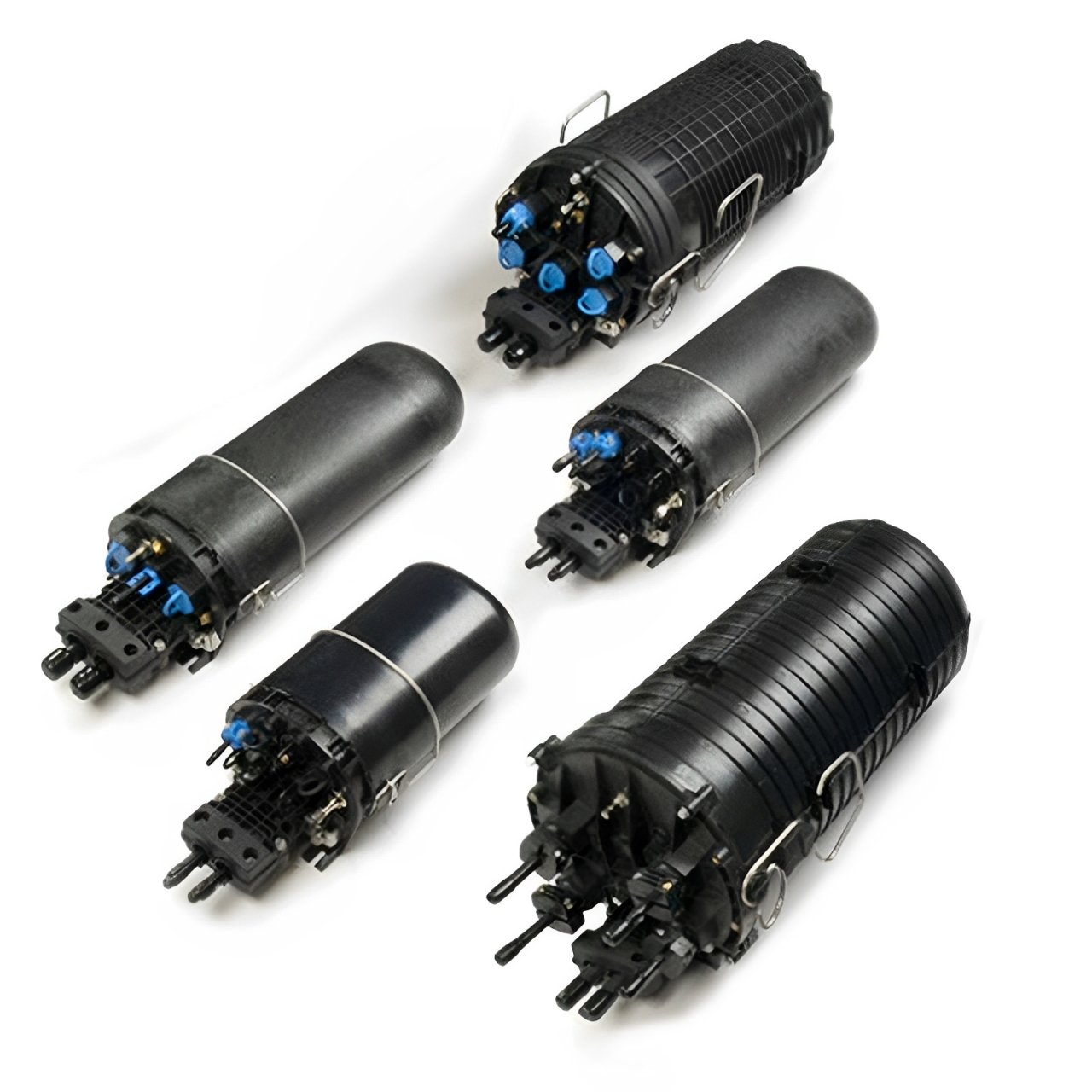
A Fiber Joint Box (also called fiber closure, splice closure, or cable joint enclosure) is a sealed outdoor or underground enclosure designed to protect fiber optic cable splices from environmental hazards while providing mechanical strength and cable management.

Core Design and Purpose
The primary function of a Fiber Joint Box is to:
- Protect spliced fibers from water, dust, moisture, and UV radiation
- Provide mechanical protection against impact, crushing, and tension
- Organize and manage loose tubes, pigtails, and splice trays
- Allow future access for maintenance or additional splices
- Maintain the minimum bend radius of the fiber
Fiber Joint Box is typically used in outdoor environments — buried directly in the ground, mounted on poles, or installed in manholes. It is the workhorse of outside plant (OSP) fiber networks.
Key Construction Features
- High-impact, UV-stabilized plastic (usually PP or HDPE) or stainless steel
- IP68 or IP67 rating for waterproof and dustproof performance
- Multiple cable entry ports with heat-shrink or mechanical seals
- Stackable splice trays (typically 12–24 fibers per tray)
- Mounting brackets for wall, pole, or underground installation
- Pressure testing valve for verifying seal integrity
Commmesh Fiber Joint Box series is designed with patented sealing systems that maintain IP68 performance even after multiple re-openings, making them ideal for FTTH distribution networks and long-haul backbone projects.
What Are Fibre Optic Enclosures?
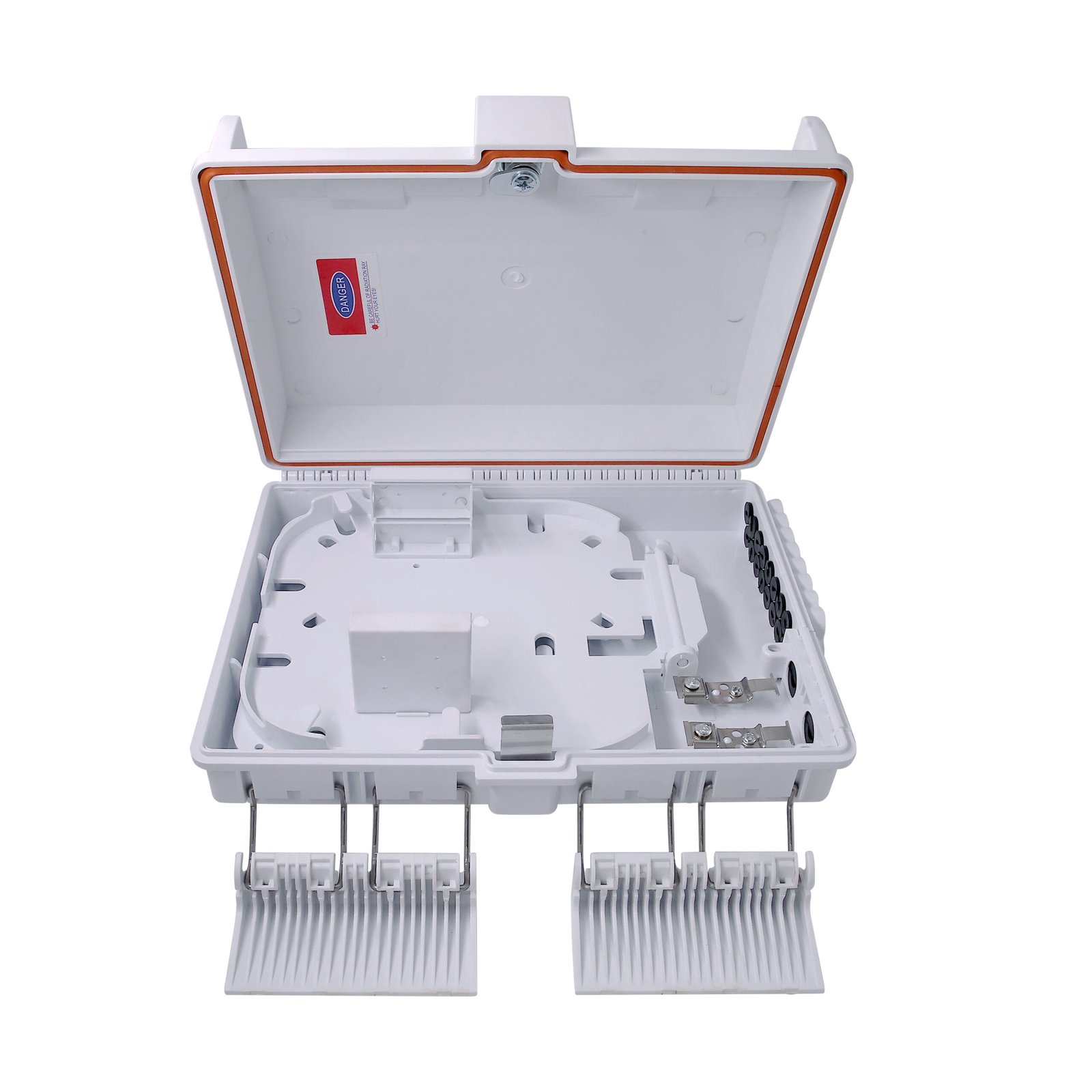
Fibre Optic Enclosures (also called fiber distribution enclosures, FDE, or fiber termination enclosures) are indoor or sheltered outdoor cabinets designed primarily for fiber termination, patching, and distribution rather than raw splicing.
Core Design and Purpose
Fibre Optic Enclosures focus on:
- Providing a secure, organized environment for fiber patching and cross-connects
- Housing adapters, pigtails, and patch cords
- Managing slack fiber and maintaining bend radius
- Allowing easy access for technicians to make changes
- Supporting high-density patching in data centers or central offices
Unlike Fiber Joint Box, which is usually buried or pole-mounted and sealed for long-term protection, Fibre Optic Enclosures are typically wall-mounted, rack-mounted, or floor-standing units used in controlled environments.
Key Construction Features
- Sheet metal or high-grade plastic construction
- IP54 to IP65 rating (suitable for indoor or sheltered outdoor use)
- High-density adapter panels (SC, LC, MPO)
- Cable management rings and slack storage
- Lockable doors for security
- Modular design for scalability
Commmesh offers a full range of Fibre Optic Enclosures from 1U to 6U rack-mount and wall-mount versions, optimized for both FTTH ODF applications and data center high-density environments.
What Is a Fiber Splicing Box?
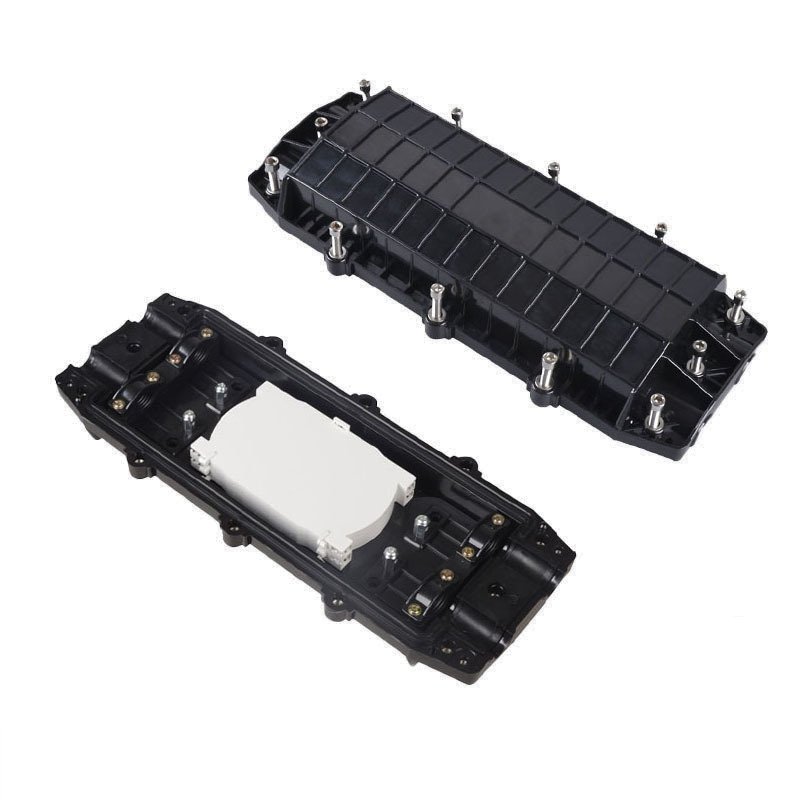
Fiber Splicing Box is a smaller, more specialized enclosure focused primarily on housing and protecting fiber splices in a compact form factor. It is often used for smaller-scale or indoor applications.
Core Design and Purpose
Fiber Splicing Box is designed for:
- Protecting a limited number of splices (typically 12–48 fibers)
- Providing a compact, cost-effective solution for distribution points
- Easy access for splicing and re-splicing
- Use in indoor or semi-protected outdoor locations
It is generally smaller and lighter than a full Fiber Joint Box and is commonly used in FTTH distribution boxes, building entrance facilities, or as part of larger enclosures.
Key Construction Features
- Compact size, usually wall-mount or pole-mount
- IP55 to IP65 rating
- 1–4 splice trays
- Simple mechanical or heat-shrink sealing
- Cost-effective plastic construction
Commmesh Fiber Splicing Box series is popular for last-mile FTTH deployments where a full joint box is oversized for the number of fibers being spliced.
Head-to-Head Comparison: Fiber Joint Box vs Fibre Optic Enclosures vs Fiber Splicing Box
1. Primary Purpose and Application Environment
- Fiber Joint Box: Outdoor, buried or aerial, long-term protection of splices in the outside plant network.
- Fibre Optic Enclosures: Indoor or sheltered, focused on patching, distribution, and cross-connect in controlled environments.
- Fiber Splicing Box: Indoor or semi-outdoor, compact splicing solution for smaller fiber counts.
2. Protection Level and Sealing
- Fiber Joint Box: Highest protection (IP68), designed for direct burial and harsh environments.
- Fibre Optic Enclosures: Medium protection (IP54–IP65), suitable for indoor or weather-protected locations.
- Fiber Splicing Box: Medium protection (IP55–IP65), for semi-protected areas.
3. Fiber Capacity and Scalability
- Fiber Joint Box: High capacity (up to 576 fibers or more), highly scalable.
- Fibre Optic Enclosures: Medium to high capacity (48–576 fibers), excellent for patching.
- Fiber Splicing Box: Low to medium capacity (12–96 fibers), best for small distribution points.
4. Installation Location and Method
- Fiber Joint Box: Underground, pole-mounted, or manhole installation.
- Fibre Optic Enclosures: Rack-mounted, wall-mounted, or floor-standing in equipment rooms.
- Fiber Splicing Box: Wall-mounted or inside larger enclosures.
5. Cost Comparison (2026 China Market)
- Fiber Joint Box: $45–$180 per unit (depending on capacity)
- Fibre Optic Enclosures: $35–$220 per unit
- Fiber Splicing Box: $18–$65 per unit
6. Maintenance and Re-Entry
- Fiber Joint Box: Designed for infrequent re-entry, robust sealing.
- Fibre Optic Enclosures: Frequent access for patching, easy re-entry.
- Fiber Splicing Box: Moderate access, simple re-entry.

When to Choose Fiber Joint Box
Elegir Fiber Joint Box when:
- You need long-term protection for splices in outdoor, buried, or aerial environments.
- High fiber counts (96–576+) are being spliced at one location.
- The closure must withstand direct burial, flooding, or extreme weather.
- Future cable additions or maintenance access is required but not frequent.
Commmesh Fiber Joint Box series is widely used in backbone and distribution networks due to its proven IP68 sealing performance and robust mechanical design.
When to Choose Fibre Optic Enclosures
Elegir Fibre Optic Enclosures when:
- The primary need is high-density patching and cross-connect in indoor or equipment room environments.
- Technicians need frequent, easy access to make changes to connections.
- The enclosure will be rack-mounted or wall-mounted in a controlled environment.
- You need to manage patch cords, adapters, and slack fiber efficiently.
Commmesh Fibre Optic Enclosures are popular in FTTH ODF rooms, data centers, and central offices for their modularity and high port density.
When to Choose Fiber Splicing Box
Elegir Fiber Splicing Box when:
- You have a small number of fibers (12–96) to splice at a distribution point.
- Cost is a major consideration and full joint box capacity is not required.
- The location is semi-protected (inside a building entrance or secondary closure).
- You need a compact, lightweight solution for quick installation.
Commmesh Fiber Splicing Box series offers excellent value for last-mile FTTH distribution points and building entrance facilities.
Technical Comparison Table
| Característica | Fiber Joint Box | Fibre Optic Enclosures | Fiber Splicing Box |
|---|---|---|---|
| Primary Environment | Outdoor / Buried / Aerial | Indoor / Equipment Room | Indoor / Semi-Outdoor |
| Protection Rating | IP68 | IP54–IP65 | IP55–IP65 |
| Typical Fiber Capacity | 96–576+ | 48–576 | 12–96 |
| Access Frequency | Bajo | Alto | Medium |
| Main Function | Splice protection | Patching & distribution | Small-scale splicing |
| Cost per Unit (2026) | $45–$180 | $35–$220 | $18–$65 |
| Escalabilidad | Alto | Alto | Medium |
| Automation Compatibility | Medium | Alto | Bajo |
How to Choose the Right Solution for Your Project
Decision Framework
- Location and Environment
- Outdoor / buried → Fiber Joint Box
- Indoor / rack-mounted → Fibre Optic Enclosures
- Small distribution point → Fiber Splicing Box
- Recuento de fibra
- High count → Fiber Joint Box or high-capacity Enclosure
- Low count → Fiber Splicing Box
- Access Frequency
- Frequent patching → Fibre Optic Enclosures
- Rare access → Fiber Joint Box
- Budget and Timeline
- Cost-sensitive small project → Fiber Splicing Box
- Long-term backbone → Fiber Joint Box
Commmesh technical team provides free consultation to help you select the optimal combination of these three products for your network architecture.
Installation Best Practices for Each Type
Fiber Joint Box Installation
- Proper cable preparation and sealing
- Correct splice tray organization
- Pressure testing after closure
- Secure mounting for pole or underground use
Fibre Optic Enclosures Installation
- Rack or wall mounting with proper grounding
- Cable management and bend radius control
- Patch cord routing and labeling
Fiber Splicing Box Installation
- Compact mounting in distribution boxes
- Simple mechanical sealing
- Clear labeling for future maintenance
Maintenance and Longevity Considerations
All three products require different maintenance approaches:
- Fiber Joint Box: Infrequent but thorough re-entry checks
- Fibre Optic Enclosures: Regular cleaning and patch cord management
- Fiber Splicing Box: Occasional inspection of seals and splices
Fibra Dekam and Commmesh products are designed for long service life with minimal maintenance when installed correctly.
Conclusion: Choosing the Right Fiber Protection Solution
Fiber Joint Box, Fibre Optic Enclosures, y Fiber Splicing Box each serve distinct but complementary roles in modern fiber optic networks. Understanding their differences is essential for designing efficient, reliable, and cost-effective fiber infrastructure.
At Commmesh, we offer a complete range of high-quality fiber protection solutions, including Fiber Joint Box, Fibre Optic Enclosures, y Fiber Splicing Box, all manufactured to the highest international standards and backed by technical support.
Need help selecting the right solution for your next project? Contact the Commmesh team today. Our experts will provide free technical consultation, detailed product recommendations, and competitive quotations tailored to your specific network requirements.
Build your fiber network with confidence — choose Commmesh for reliable, high-performance fiber protection solutions.
 ES
ES  EN
EN  ID
ID  TL
TL  AR
AR  TH
TH  MS
MS  VI
VI  SW
SW  AM
AM 